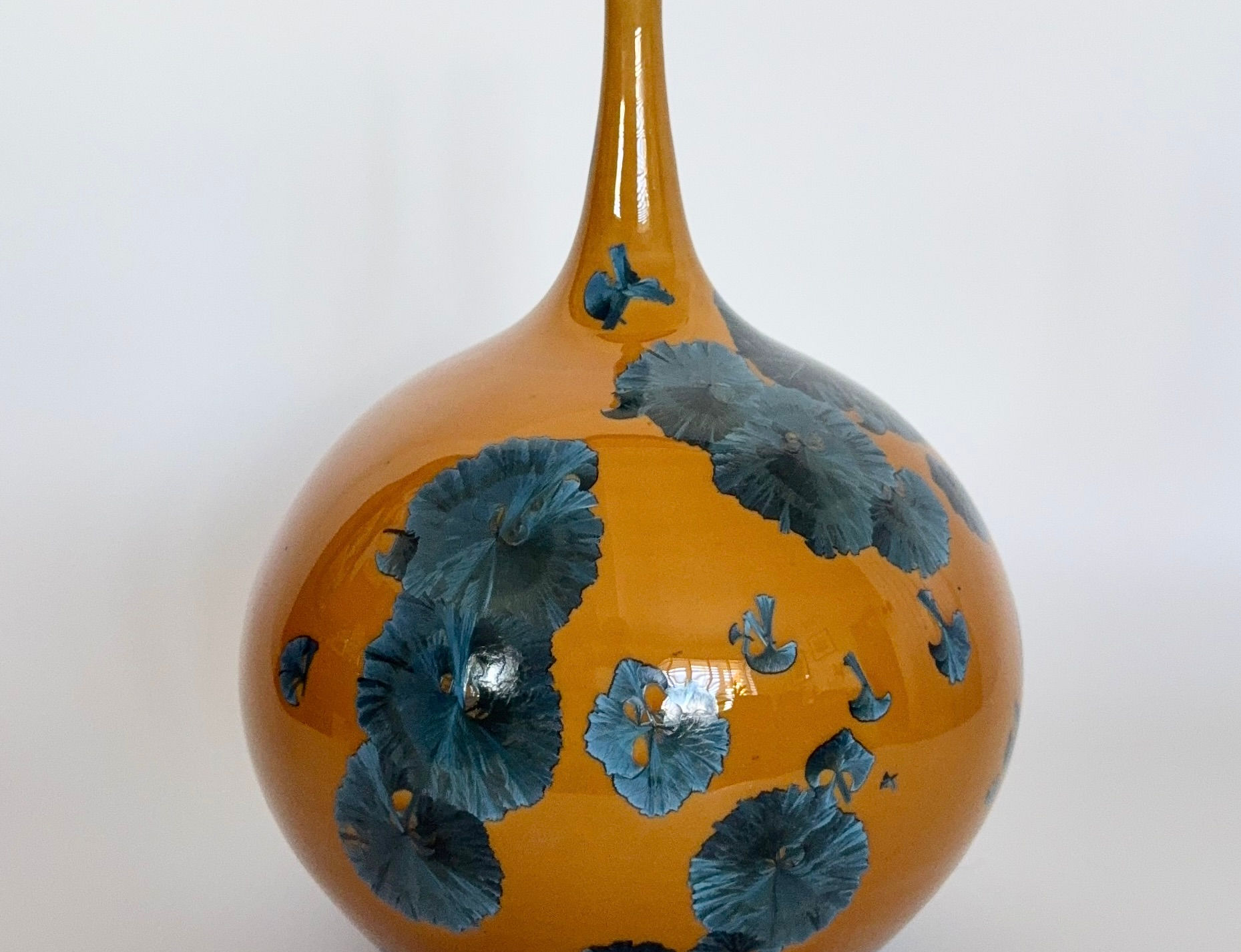
Throwing.
Updated: Oct 14, 2025
There is something very satisfying about starting with a ball of soft clay which you control and shape into something which is functional and pleasing to the eye. The spinning of the wheel, the centering of the clay, the opening, pulling up and shaping the form are totally absorbing. The process takes a long time to learn and even longer to become proficient at but once the basics are learnt they form the building block to develop and enhance technique.
I learnt my trade, so to speak, at Prinknash Abbey in Gloucestershire. This Benedictine community started a pottery in the early 1920,s and it became a very successful business. Originally, the 'Brothers' were the potters making pots in the traditional way, by hand, throwing on the potters wheel. They developed a shiny black pewter like glaze which became synonymous with their wares. By the 1970s the pottery was very successful adopting factory methods to increase production. Lay workers were employed to help keep pace with demand and ensure the financial success of the business.
The Brothers retained a small group of traditional potters who continued to throw by hand whilst at the same time increasing production by the use of plaster moulds and large scale casting processes. In 1974 I was able to get a job learning to throw and spent the next two years honing the skill. I learnt by throwing repeat shapes over and over again. Known as production throwing it involved weighing out dozens of clay balls all exactly the same weight and then throwing mugs, vases and bowls over and over again. In the end I was able to make over a hundred pots a day depending on size. I learnt a great deal about the importance of the clay body and its preparation. The clay being a commercial earthenware body that was put through a pugmill twice before weighing out the clay balls. The clay needed to be the right consistency to enable rapid throwing techniques.
I also learnt about turning pots once they were leather hard so that the shape could be finished and refined. Pulling handles and attaching them without cracking was another skill that has stood me in good stead. As was the art of glazing and firing. So I am grateful for my time at Prinknash and the skill of those who taught me.
I think it was the best way to learn about clay and the production of pottery for the commercial market. It certainly gave me a solid grounding which has remained with me ever since and I would recommend anyone thinking about becoming a potter to find some way of learning the art of production throwing.


Comments