top of page
All Posts


Clay Bodies & Crystalline Glazes
Many crystalline potters agree that porcelain is the ideal clay for crafting crystalline glazed pottery, and this is largely accurate. Porcelain's smooth texture contributes to a flat, scratch-free surface after bisque firing. Moreover, its low iron content facilitates crystal formation during firing. However, the main challenge with porcelain is its difficulty when throwing on the potter's wheel. Those who have attempted it are familiar with the challenge, but with patience
Patrick Geenty
Aug 132 min read


The Secrets of Ceramics with Crystalline Glazes
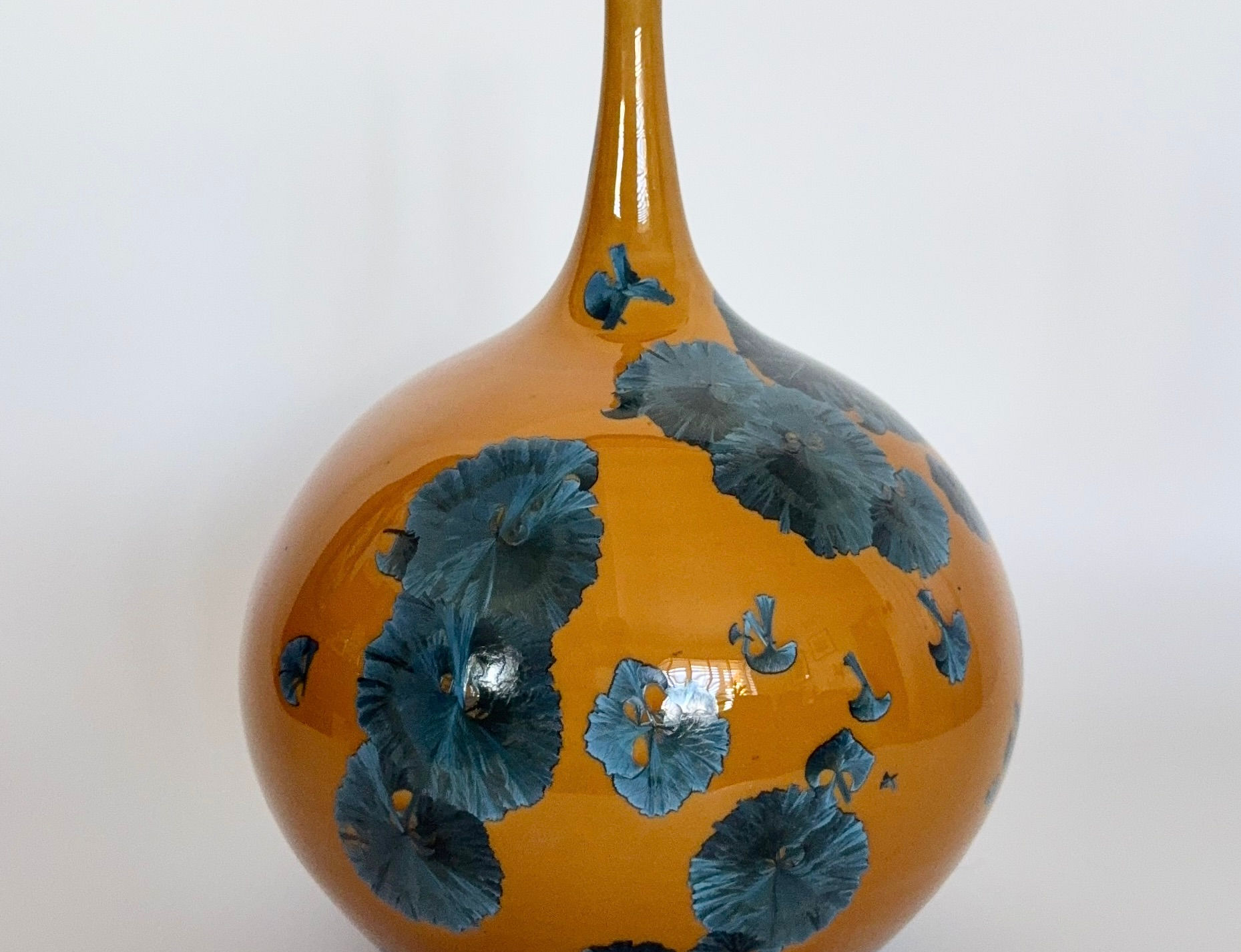
Ceramics with crystalline glazes have long fascinated collectors and artists alike. Their unique, shimmering patterns and delicate crystal formations set them apart from more common pottery styles. The process to create these ceramics is both an art and a science, requiring patience, precision, and a deep understanding of materials and firing techniques. In this post, I will share insights into the secrets behind these stunning pieces, offering practical knowledge for those i
Patrick Geenty
Jun 34 min read


The Science Behind Ceramic Glazes with Crystal Effects
Ceramic glazes with crystal effects have fascinated potters and collectors for centuries. These glazes create unique, often unpredictable patterns that resemble natural crystals growing on the surface of pottery. The process behind these effects is a blend of art and science, involving precise control of materials, temperature, and timing. Understanding the science behind these glazes helps in appreciating the skill and patience required to produce such stunning pieces. Under
Patrick Geenty
Feb 244 min read


Mastering the Art of Crystalline Pottery
Understanding Crystalline Pottery Crystalline pottery is a unique form of ceramic art. It features natural crystals that form during the firing process. These crystals create intricate patterns, making each piece special. The beauty of crystalline pottery lies in its unpredictability. Each firing can yield different results, which adds to the charm of the craft. Creating these pieces requires a deep understanding of materials and techniques. The potter must carefully select t
Patrick Geenty
Feb 14 min read


Throwing.
There is something very satisfying about starting with a ball of soft clay which you control and shape into something which is functional and pleasing to the eye. The spinning of the wheel, the centering of the clay, the opening, pulling up and shaping the form are totally absorbing. The process takes a long time to learn and even longer to become proficient at but once the basics are learnt they form the building block to develop and enhance technique. I learnt my trade, so
Patrick Geenty
Mar 1, 20192 min read


Copper to Potter
This is my first attempt at a blog so please be patient with me! I thought it may be of some interest to give a little background into how I got started in Ceramics. It all began at school with a brilliant teacher called Rachel Caruthers who taught Art and English. She had an art room filled with pottery equipment and she introduced me to throwing on the potters wheel. I just loved it and spent every hour I could trying to make something!! That started it. From there I spent
Patrick Geenty
Jan 12, 20192 min read
bottom of page